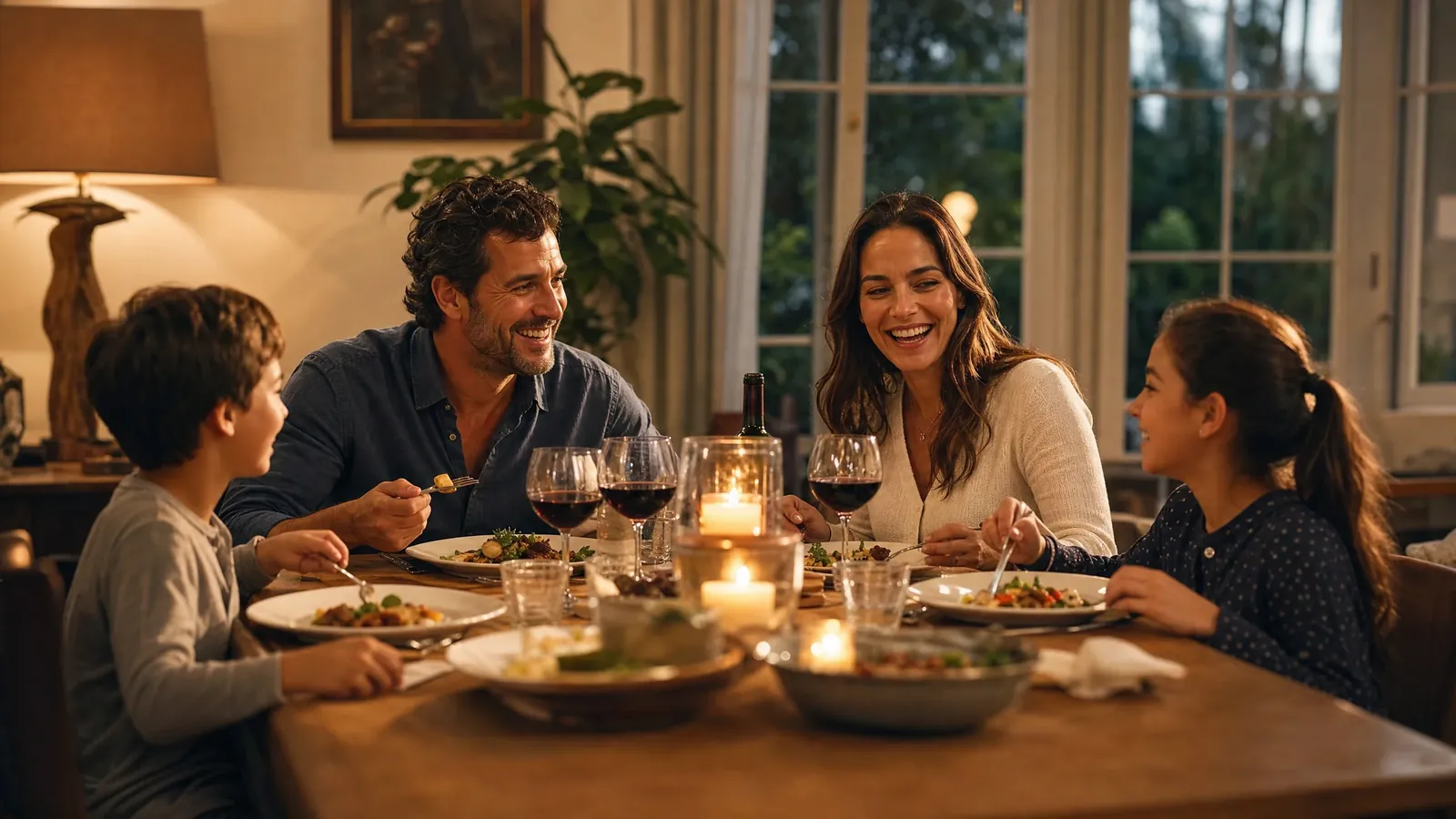
Picture last Saturday. The dining room was full, the tablet kept chiming, and a few first-timers told your server they'd be back. Now try to reach those people on Monday. If they ordered through a delivery app or paid at the table and left, you probably can't. You know they came. You just have no way to say hello again.
That is the problem email solves, and it is why this guide starts with the list, not the newsletter design.
What Is Restaurant Email Marketing?
Restaurant email marketing means collecting guests' email addresses with their permission and sending them short messages that lead to another visit or order: a welcome note after the first order, a new dish, a birthday treat, a slow-night offer, or a "we miss you" when a regular goes quiet. The goal is a repeat order that comes to you directly, not through a marketplace.
It is cheap to run. You don't pay per view or per click the way you do with ads. What it costs is attention: a list worth sending to, and a few emails written well enough that people act on them.
Why Your Restaurant Email List Has to Be Yours
When a guest orders through a third-party app, the app usually keeps the relationship. You see the order. The app keeps the ability to contact that guest later, and it can show them other restaurants the next day. We went through the cost side of this in how to cut third-party commissions to 0%. The marketing side is simpler: you can't email people whose details you never received.
Guests are open to ordering direct. In a 2025 NCR Voyix survey, 58% of customers said they prefer to order delivery through a restaurant's own app or website, a figure we also used in our guide to commission-free delivery. Every one of those direct orders is a chance to add a guest to your list. With DevourNow's commission-free ordering, the guest record sits next to their order history, so you can see who ordered, how often, and when they last came back.
Every direct order is a guest you can reach again. Start with your own ordering page.
How Do You Build a Restaurant Email List?
Skip the giveaway. Most restaurants already have four or five moments where a guest would say yes if asked plainly:
- Online checkout. Add an unticked box: "Email me new dishes and specials, about once a month." The guest has just typed their email address, so it takes them one click.
- Your website. One sign-up field on the menu page with one concrete reason, such as first look at the seasonal menu.
- The table or counter. A QR code on the check presenter that opens a two-field form: email and birthday month.
- Catering orders. The office manager who ordered lunch for 20 is the best sign-up you will get all month. Ask them directly whether they want catering menu updates.
- Your Google listing. People who find you on Google and click through to your site are already interested. Better local visibility means more of them reach your sign-up form.
Whatever the spot, say what people get and how often. "One email a month, new dishes first" gets more sign-ups than "Join our newsletter," and it is a promise you can keep.
Restaurant Email Marketing Ideas: Which Six Emails Should You Send?
You don't need a weekly newsletter to start. Most of the value comes from six emails, four of which you write once and automate:
| Trigger | Content | Automate? | |
|---|---|---|---|
| Welcome | First order or sign-up | Thanks, what to expect, your best seller with an order link | Yes |
| Birthday | Birthday month | A small extra, like dessert with their next order | Yes |
| Win-back | No order in 30, 60 or 90 days | Something new on the menu, then a modest offer | Yes |
| Post-catering | A few days after a catering order | Thanks, plus the catering menu for next time | Yes |
| New dish | Menu launch | One dish, one photo, one button | No |
| Seasonal | Two to three weeks before a holiday | Holiday hours, group orders, private dining | No |
Keep every email to one idea and one button. Most guests read on a phone, between other things. "Order the new short rib" gets a tap. A six-section newsletter gets scrolled past. If you want these emails in a calendar, our 90-day restaurant marketing plan lays out a weekly routine.
How Do You Use Offers Without Training Guests to Wait for Discounts?
Offers work. In an October 2025 YouGov survey of 1,500 U.S. adults, buy-one-get-one deals (58%) and discounts (56%) were the strongest reasons people gave for dining out more often. Loyalty points and free appetizers came next, at 33% each.
Everyone else knows this too. The National Restaurant Association's State of the Restaurant Industry 2025 report found that 47% of operators planned to add discounts or value promotions that year. That means your guests' inboxes are full of deals, and a blanket 15% off every month blends in while cutting your margin on orders you would have received anyway.
The fix is to aim the offer. Send it to guests who stopped ordering, or attach it to a night you need to fill, and give everyone else a reason to come back that isn't a price cut: a new dish, early access, a birthday extra. We made the same case for rewards in restaurant loyalty program ideas without an app.
When Should a Restaurant Send a Win-Back Email?
A regular who hasn't ordered in a while hasn't necessarily left for good. Often they just fell out of the habit. Choose a quiet window that matches how often your guests normally come in. Thirty days suits a lunch spot or coffee shop. A dinner destination might wait 60 or 90. Then run a short sequence:
- Email one: a friendly note and something new to try. No discount.
- Email two, a week later: only to guests who still haven't ordered, now with a specific offer.
- Email three: ask whether they still want to hear from you, and remove them if not.
Stop the sequence as soon as a guest orders. Removing people who never engage isn't a loss. It keeps your list healthy and your emails out of spam folders.
How Often Should a Restaurant Send Marketing Emails?
For most independents, a sensible starting point is one planned email a month, plus the automated ones that fire on their own. That is enough to stay familiar without becoming noise. Add an extra send only when there is real news, such as a seasonal menu or a holiday ordering deadline. If unsubscribes jump after you increase the pace, go back.
Email vs Text Messages: Which Works Better for Restaurants?
They do different jobs. Email is for anything that benefits from a photo and a few sentences and can wait a day: a new menu, catering options, a monthly note. A text or direct message is for something that only matters today, like "Patio's open tonight" or "Two tables left for Friday." Because texts feel personal, send them rarely.
DevourNow's marketing tools include email campaigns with templates and scheduled sending, plus direct messaging, so both channels draw on the same customer list.
Want regulars who order every week without being chased? Family Club turns local households into repeat customers.
Which Restaurant Email Metrics Actually Matter?
Look past open rates. Since 2021, Apple's Mail Privacy Protection has stopped senders from using invisible pixels to see when an email is opened. As a result, an open count that includes Apple Mail users no longer tells you reliably who actually read the email.
Clicks are much smaller and much more honest. Mailchimp's benchmark across all its users is a 35.63% average open rate but a 2.62% average click rate (data last updated December 2023). Mailchimp doesn't publish a restaurant category, so treat that as a general reference, not a target. Here is what it means in practice: send an email to 1,000 guests at that click rate and about 26 people tap through. Your job is to make the email good enough that a fair share of those 26 order.
So track four things, in this order:
- Orders per email. The number that pays the bills.
- Click rate. Whether the subject and offer were worth acting on.
- Unsubscribes. A few per send is normal. A spike means the email missed or you are sending too often.
- Repeat guests. How many people on the list ordered more than once this quarter.
Counting orders per email is easy when email and ordering share one system and painful when they don't, which we covered in why one integrated restaurant system beats five disconnected tools.
What Does CAN-SPAM Require From Restaurants?
In the U.S., the CAN-SPAM Act covers commercial email, and the FTC's compliance guide spells out the main rules. Your sender name and subject line must be honest. Every email must include your valid physical postal address. You must give people a clear way to opt out and honor that request within 10 business days. The guide lists penalties of up to $53,088 for each email in violation.
Text messages fall under separate, stricter consent rules, so check those before sending marketing texts. And beyond the law, people who chose to join your list are the ones who open, click and order.
Key Takeaways
- 58% of customers prefer ordering delivery through a restaurant's own site or app (NCR Voyix, 2025), and each direct order is a list sign-up opportunity.
- BOGO (58%) and discounts (56%) top diners' reasons to eat out more (YouGov, 2025), but 47% of operators planned to add promotions in 2025 (NRA), so target offers instead of blanketing the list.
- At Mailchimp's all-user average click rate of 2.62%, a 1,000-guest send yields about 26 clicks. Judge emails by orders, not opens.
- CAN-SPAM requires a postal address in every email and opt-outs honored within 10 business days.
FAQs
Can I email customers who ordered through a delivery app?
Usually not. Marketplace apps generally keep the guest's contact details and marketing permission. To email a guest, you need them to order from your own website or sign up with you directly.
Do I need a separate email tool like Mailchimp?
Not necessarily. A general email tool works, but it doesn't know who ordered what. DevourNow includes email campaigns with templates, scheduling and segmentation by order history, so you can send to, for example, guests who haven't ordered in 60 days.
What is a good open rate for restaurant emails?
There is no reliable restaurant benchmark, and Apple's Mail Privacy Protection makes open counts unreliable anyway. Compare your own click rate and orders per email from month to month instead.
Should every restaurant email include a discount?
No. Save discounts for win-back emails and nights you need to fill. Use new dishes, early access and birthday extras for everyone else, so regulars don't learn to wait for a coupon.
Can I add guests to my email list without asking?
Ask first. A clear opt-in at checkout or on a sign-up form builds a list of people who want to hear from you, and every email must still include an easy way to unsubscribe.
Sources
- Restaurant Dive: Most customers prefer ordering delivery direct from restaurants (NCR Voyix)
- YouGov report via Restaurant Dive: Rising costs reshape America's appetite for dining out (October 2025)
- Restaurant Dive: National Restaurant Association, 47% of operators plan discounts or value promotions in 2025
- Apple Newsroom: Mail Privacy Protection announcement (June 2021)
- Mailchimp: Email marketing benchmarks
- FTC: CAN-SPAM Act, a compliance guide for business

Stan Liachev, PhD, brings over 30 years of software leadership to restaurant technology via DevourNow. He champions local and small-chain restaurants into carving an online space of their own, guiding them to tap into the modern customer base through expert tools, so they don't lose out on commissions.
See your restaurant's AI & Google visibility score.
Run a free 120-point audit and discover exactly what's costing you orders - then fix it with DevourNow's commission-free growth platform.