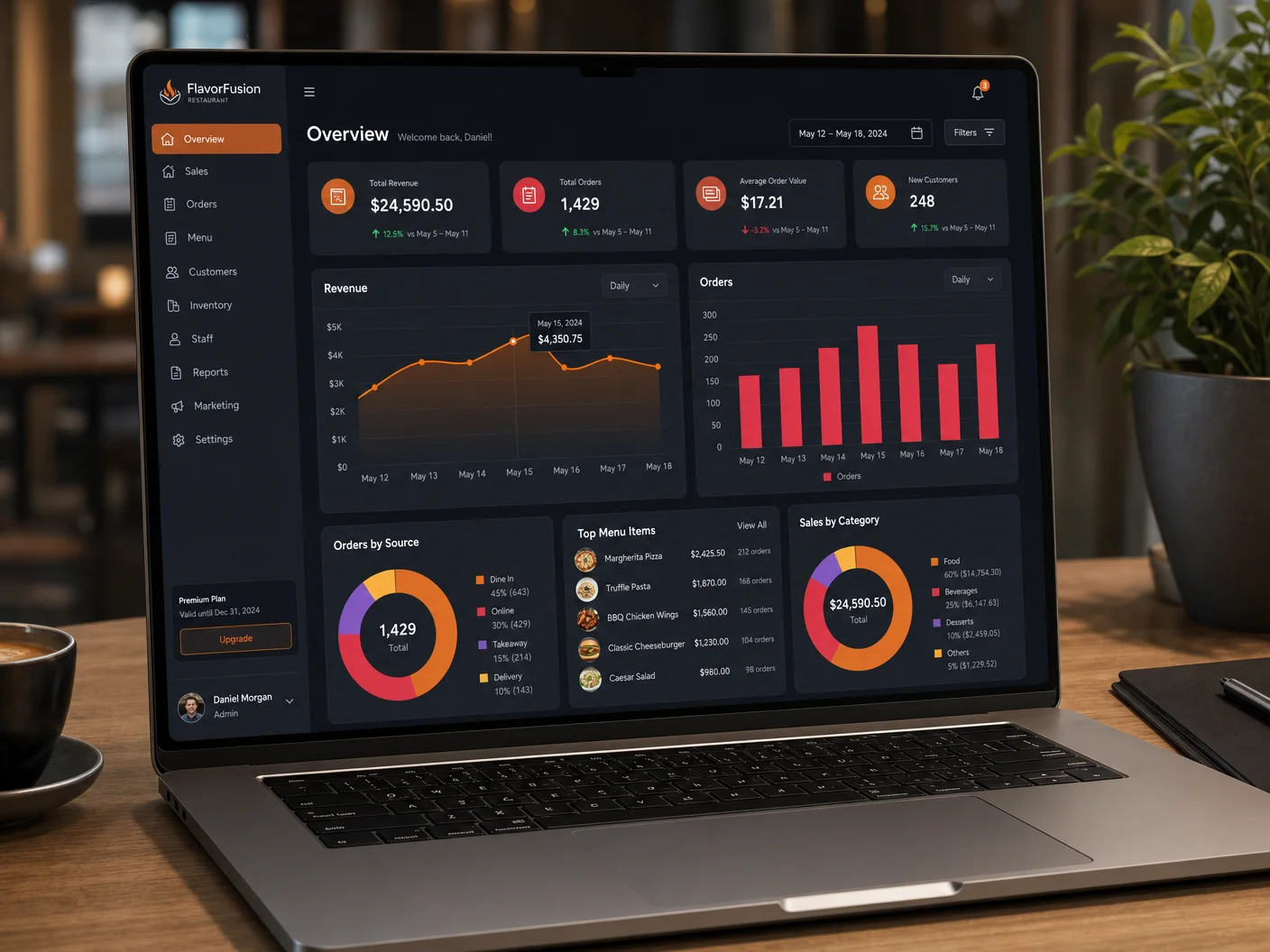
A regular orders the same chicken bowl every Tuesday. Each week she opens her browser, searches your name, taps past the map, finds the menu, adds the bowl, types her address and digs out her card. It takes four minutes. One Tuesday a delivery app on her home screen offers the same bowl in three taps, and she takes it.
That is the real question behind "should we build an app?" It isn't about having an icon in the App Store. It is about whether ordering from you again is as quick as ordering from the app she already has.
What Is a Restaurant App, and Does My Restaurant Need One?
A restaurant app is a branded ordering tool that lives on a guest's phone and lets them reorder, pay, track the order and collect rewards in a few taps. Most independent restaurants don't need a native app first. They need an ordering experience that behaves like one, which a fast mobile ordering page and a wallet pass can deliver.
A native app makes sense later, once you have regulars who order often enough to keep an icon on their home screen. Before that, the app just sits in the store with few downloads.
Do Guests Prefer a Restaurant App or an Ordering Website?
Almost everyone has the device. Pew Research Center's mobile fact sheet reports that 91% of U.S. adults own a smartphone. So the question is which door they want to use on it.
NCR Voyix's 2025 Customer Experience Report, covered by Restaurant Dive, found that 58% of customers prefer to order delivery through a restaurant's own app or website. That 58% splits evenly: 29% prefer the restaurant's app and 29% prefer its website. Another 15% would rather call. The reasons guests gave were convenience (65%), ease of customization (50%) and earning loyalty points (36%).
Read those numbers together. Guests want to order direct, and roughly as many are happy on a website as in an app. What they won't accept is a slow, clumsy path. A good ordering page covers the website half today. An app only wins the other half if it is genuinely easier than what they already use. If you are still choosing that ordering page, our guide to choosing an online ordering system covers the contract questions.
Guests want to order direct. Give them a mobile ordering page built around your brand, with 0% commission.
What Should a Restaurant Ordering App Do? 6 Things Guests Expect
Whether you ship a native app or a mobile ordering page, guests judge it against the delivery apps already on their phone. These six features decide whether it gets kept or deleted.
1. Reorder in one tap
The regular from the opening scene should see "Your usual: chicken bowl, extra sauce" on the first screen. Showing past orders up front does more for repeat business than a beautiful menu.
2. Saved payment and address
Typing a card number on a phone is where many orders die. Saved cards, or the phone's own wallet payment, turn a two-minute checkout into a few seconds. Do the same for the delivery address.
3. Live order status
"Received, cooking, out for delivery, delivered." Guests who can see progress don't call the restaurant to ask where the food is, which also frees up your staff on a busy night.
4. Rewards they can see
If 36% of guests cite loyalty points as a reason to order direct, the points have to be visible. A balance buried three menus deep doesn't motivate anyone. Show progress on the home screen or on a card in their phone's wallet.
5. Few, useful notifications
"Your order is ready" is useful. "Taco Tuesday is back" once a week can be. Daily promotions get notifications switched off, then the app deleted. Google's own Wallet developer docs cap pass messages that trigger a push alert at 3 per 24 hours, which tells you how seriously platforms take notification fatigue.
6. No forced sign-up
Let first-time guests order as a guest and offer an account after the order, when saving their details has an obvious payoff. Asking for a password before they see the menu loses people who were ready to buy.
Native App vs Mobile Web vs Wallet Pass: Which Restaurant App Option Fits?
There are four ways to get onto a guest's phone. They differ in what the guest has to do, what you pay, and who keeps the customer relationship.
| Option | What the guest does | Notifications | Who owns the guest data | Best for |
|---|---|---|---|---|
| Native iOS/Android app | Finds it in the app store, downloads, signs in | Yes, push notifications | You | Restaurants with frequent regulars |
| Mobile web ordering or progressive web app (PWA) | Taps a link; can add a PWA to the home screen | Web push, on iPhone only after adding to home screen (iOS 16.4+) | You | Every restaurant, as the base layer |
| Wallet pass (Apple Wallet, Google Wallet) | Taps "Add to Wallet" once | Pass updates; Google allows up to 3 alerts a day | You | Rewards, offers and membership cards |
| Marketplace delivery app | Nothing new; already installed | Yes, controlled by the marketplace | Usually the marketplace | Discovery by new guests |
A few details from the platform docs are worth knowing. Google describes a progressive web app as one that can reach "any web user on any device with a single codebase," and installing it moves it out of the browser into its own window. Apple's Wallet developer page says store cards can be updated to show a current balance, and coupons can be updated with a new offer and expiry date. That is most of what a loyalty app does, without a download.
Marketplace apps are the easiest path for the guest and the weakest for you. The guest is theirs, and the same screen that shows your restaurant shows ten others. Our breakdown of commission-free delivery covers what moving those orders direct is worth.
Want regulars who come back without an app download? Family Club turns local households into repeat customers.
When Is a Branded Restaurant App Worth the Cost?
A native app has fixed costs before the first order. If you publish under your own developer accounts, Apple charges 99 USD per membership year for its Developer Program, and Google Play charges a US$25 one-time registration fee. Then there is design, development, app store review, and updates every time iOS or Android changes.
The bigger cost is attention. An app only earns its place when a guest opens it often. A simple test: if your best guests order from you every week or two, an app icon is a reasonable shortcut for them. If most guests order a few times a year, they won't keep it, and a fast ordering page plus a wallet pass will do more.
When you reach that point, you don't have to build from scratch. DevourNow offers a Custom Mobile App add-on, branded iOS and Android apps for your restaurant at $49.99 a month, with a 4 to 6 week timeline for activation and app store approval. It is optional and sits on top of the same commission-free ordering, so guests who never download it can still order from your page.
How Do You Get App-Like Ordering Without Building an App?
Build in this order, so each step works on its own:
- A mobile ordering page you own. Fast on a phone, guest checkout, saved details for returning guests, order status. DevourNow sets this up in 4-7 days with 0% commission on orders and weekly Stripe payouts.
- Rewards in the phone's wallet. DevourNow's JoyBag rewards, surprise bundles and exclusive offers, live in Apple Wallet and Google Pay, so guests carry them without installing anything. See the marketing tools for how they fit with email campaigns and direct messages.
- A home screen shortcut. Put your ordering link on receipts, bags and table cards, and tell regulars they can add it to their home screen.
- A native app, if the numbers justify it. Once a meaningful group of guests orders every week or two, an app gives them the one-tap path they already use.
If you want ideas for rewarding regulars that don't depend on any of this technology, read our loyalty program ideas without an app.
Key Takeaways
- 91% of U.S. adults own a smartphone (Pew Research Center), so the decision is about the ordering path, not access.
- Guests who prefer ordering direct split evenly: 29% want the restaurant's app and 29% its website (NCR Voyix, 2025). A strong mobile ordering page serves half of them before any app exists.
- 36% of guests name loyalty points as a reason to order direct, and wallet passes can show an updated balance or offer without a download (Apple, Google).
- Your own native app starts with store fees of 99 USD a year (Apple) and US$25 once (Google) before any build cost, so it pays off only with frequent regulars.
FAQs
How much does it cost to build a restaurant app?
Costs vary widely by agency and features. A custom build costs far more than a subscription app built on an ordering platform, and both need ongoing updates for new iOS and Android versions.
Can a website send push notifications to iPhone users?
Yes, since iOS 16.4, but only after the guest adds the web app to their home screen and grants permission.
Will guests download an app for a restaurant they visit once a month?
Some will, many won't. Guests who order less often are usually better served by a quick ordering link and a rewards card in their phone's wallet.
Should my restaurant app have its own loyalty program?
It should show the same rewards as every other channel. If points only work in the app, guests who order on the website or in person feel left out, and your records split in two.
What is the difference between a PWA and a native app?
A PWA is a website that can be installed to the home screen and runs from one codebase on every device. A native app is built separately for iOS and Android and is downloaded from an app store.
Sources
- Pew Research Center: Mobile fact sheet
- Restaurant Dive: Most customers prefer ordering delivery direct from restaurants (NCR Voyix)
- Google for Developers: Google Wallet, trigger push notifications
- Apple Developer: Apple Wallet
- web.dev: What are Progressive Web Apps?
- WebKit: Web Push for Web Apps on iOS and iPadOS
- Apple Developer: Enrolling in the Apple Developer Program
- Google Play Console Help: Create and set up your developer account

Stan Liachev, PhD, brings over 30 years of software leadership to restaurant technology via DevourNow. He champions local and small-chain restaurants into carving an online space of their own, guiding them to tap into the modern customer base through expert tools, so they don't lose out on commissions.
See your restaurant's AI & Google visibility score.
Run a free 120-point audit and discover exactly what's costing you orders - then fix it with DevourNow's commission-free growth platform.